Tuesday, May 3, 2011

May Day Reflections

It's about 2 days too late but I've been sick of the internet and all who inhabit it not been very motivated lately.

This Sunday, as most of you reading this probably already know, marked the anniversary of the 1886 General Strike for an eight hour work day (8 for rest, 8 for work, 8 for recreation), and the subsequent Haymarket Massacre in Chicago, and the wrongful execution of 4 strikers accused of throwing dynamite. May 1st, May Day or International Workers' day is the commemoration of the struggles and victories of organized labor and all of those who seek liberation and economic and social justice.

Before it became a day to celebrate workers' struggles, May the First was Beltane, a Gaelic festival that, as most other spring festivals, celebrated fertility and rebirth. Call me delusional, but I like to think this is no coincidence.

Every worker victory is a rebirth. Every victory for social and economic justice and every stepping stone toward democratic liberation and egalitarianism is a small step toward rebirth. Every person who comes to find class consciousness is part of a collective, spiritual reawakening that will allow a new period of equality to grow from the ashes of the old power structures.


That's all very lofty sounding but you get the idea. Now more than ever are these things evident. Government attacks on organized labor, right wing austerity measures, supremacy of the banks and steps toward plutocratic totalitarianism have been met by increased involvement by workers' rights and democracy advocates, as well as increased support for them. The occupation in Wisconsin, the US/UK Uncut Movements, the demonstrations and riots all over Europe from Ireland to Greece, The Walks for Choice and countless other demonstrations of the people's will are evidence of a new world rising from beneath our own that just needs a few more people to push it.


This past May Day, rallies in L.A, Chicago, Santa Rosa, Honduras, Turkey, Venezuela and several other places showed their support for general progress, or protested Anti-Immigration laws and Anti-Labor laws - all demonstrating increasing popular support for change.

I am as convinced as ever that revolutionists do not make a revolution. The people make the revolution, the revolutionists only help it along. Their role is educating the masses, promoting the strikes and protests, and letting democracy take care of the rest.

Tuesday, April 26, 2011

Misconceptions Addressed: The Need for the Rich

Or: Atlas Needs Us, We Don't Need Him

I got into a lengthy discussion with my grandmother, yesterday, that was set off by a set of side-by-side columns in the Washington Post. The column I had commented on was one that speaks against taxing the rich based on fairness. The conversation that ensued -which was initially about an analogy used by the columnist that I thought was intellectually dishonest- elevated to being one about entrepreneurship.

I've addressed before, and I eventually managed to make clear to her, that the American Meritocracy is a myth because, despite the few rags-to-riches stories that are over-emphasized to appear typical, the odds against a person of little privilege "pulling themselves up by their own bootstraps" are phenomenal.

What the discussion came down to was that, according to her, the rich are overpaid for many things, but they are still necessary as our society's source of management and innovation. If they weren't there to take the risks and start the businesses, where would the innovation come from?

I managed to make my point clear enough, but I had one of those, "Goddamn it, that's what I should have said!" moments later on in the evening.

What I should have said was "Creators gonna create, Mimi."

That's the real gist of it. Production of commodities is driven by demand. Demand comes from need, and need existed long before -and will continue to exist long after- capitalist middle-men. We planted and harvested corn because we were hungry, we built houses because we needed shelter, we invented games because we were bored. Need drives innovation and need drives production, not a dollar bill on a fishing pole. If we need it, we will create it somehow; and if Jonas Salk (inventor of the Polio vaccine) had "gone Galt," someone else would have done what he neglected to do.

Just like haters gonna hate and masturbators gonna masturbate, so are creators gonna create and innovators gonna innovate. You don't become a doctor or teacher for the paycheck, you do it because you have a desire to heal and teach. Salk didn't invent invent the Polio vaccine because he got paid, he invented it because there was a need for it and he had the desire to fill that need. This, of course, isn't to say that these innovators and inventors shouldn't be reimbursed for their contributions to the public, only that their motivations are not, and should not be, simply to exploit society's needs for a profit.

In industry, innovation would be better to come from the engineers and workers motivated by efficiency and practicality, rather than coming from executives and marketers motivated by profit alone. How many revolutionary innovations do you think have been ignored because they did not promise a hefty return on someone's investment? How many more do you think have been outright sabotaged, despite how they might have helped mankind, because they threatened to hurt profits? The incredibly slow progress of the search for alternative energy is a perfect example. Because oil is more profitable right now than alternative energy, and because alternative energy is a threat to oil profits, the free market suffocates efforts to advance it.

Again, I'm not proposing that everyone just do everything they do for free (although I'm not saying that wouldn't be great, either). I'm saying that, when we need something, we are going to find a way to get it with or without those who would exploit that need for profit.

Of course, this is all ignoring the fact that very few of the super rich in this world actually are the innovators and creators that bring our civilization progress and prosperity; quite the contrary. The conservatives and Ayn Rands of the world would surely like us to believe this, but it is simply not true. The majority of our super rich are those born into relative privilege (most of whom were born into exorbitant privilege), and either utilized that privilege to jump into management positions, or used their unearned wealth and property to invest in the creators and innovators who have no other way of doing what they do best.

Monday, April 25, 2011

On Leftist Unity

One of the most important concepts in leftist ideology is that which emphasizes the importance of supporting all workers' struggles against the ruling classes. Considering the variety of thought and the infighting that occurs between various facets, being able to unify under a few basic and fundamental commonalities is extremely important.


Common Goals:
The Spanish Civil War of the mid to late 1930s gives us one of the best examples of a successful, decentralized socialist society, but it also gives us the best example of how having a lack of a unified platform can really blow up in your face. Portrayed by Orwell's Homage to Catalonia is a great deal of infighting amongst the anti-fascist forces. The Anarchists, the bourgeious-democratic republicans and the various Marxist facets of the POUM all had different plans for post-war Spain. This infighting and failure to determine a common coalition platform hurt morale, and the overall "revolutionary spirit" of the Republican Left diminished as the war went on.

This is why it is extremely important to emphasize the common goals between differing leftist tendencies. Anarchists and Marxist Leninists do not have to necessarily be enemies, for instance. What we need is not to recruit as many people as possible to one group, but to create a coalition built on the common goals of those groups.

The difficulty in finding those commonalities rests on the fact that these different groups and ideologies have differing strategies for attaining the same goal. Both Marxist-Leninists and Anarchists, for example, hope for a stateless and classless society. The difference is that Marxist-Leninists would utilize a transitional socialist government, where anarchists would do away with the state immediately. Solving this problem rests on compromise and collaboration. An immediate goal needs to be established. The nature of the immediate goals depend on the nature of the coalition, and once those goals are reached, the hammering out of various other details may begin.

When it can be harmful
Supporting any opposition to the ruling elite is important to the health and efficiency of the movement, but there are many who seem to misunderstand. There are many who seem to believe that supporting any struggle against the ruling elite also means never questioning it; they refuse to criticize any regime that opposes "western" imperialism, no matter how worthy of criticism those regimes are. Supporting that opposition does not mean ignoring, accepting, or apologizing for the failures of those involved. Qaddafi's Libya, for instance, is defended by far too many people because it, especially in light of recent NATO agression, is an enemy of American and European economic willpower. Libyan opposition forces are called "counter-revolutionary," and "reactionary" despite the fact that Libya's government and its plethora of human rights violations are far from "revolutionary."

The Libyan "Opposition," on the other hand, is by no means immune to criticism simply because it opposes a tyrannical government. These groups are very thoroughly infiltrated by CIA influence and would likely only establish a bourgeois-democratic puppet government completely subservient to Western economic interests.

The opposition to the elite should be supported, but should never be beyond criticism.

Defeating the Moderate Advantage
Another obstacle faced by the Republican Left of the Spanish Civil War is one that the Left in the United States, as well as numerous other countries, still face. In any coalition of people and ideologies advocating reform, it is usually the least radical group whose demands are met (this is leaving out hostile coups and the like). Their platform is the least challenging, their transition is the least difficult and their ideology is the least at-odds with the status quo. In the Spanish Civil War, that group was the Republicans. In the United States, that group is the Democratic party, which many would-be socialists, anarchists or reformers side with. Because of its very moderately left leanings, it is perceived as more likely to gain ground in our political climate. The goals it seeks are small and still fit into the current socio-political structure while slightly acknowledging left wing sentiments. The result is, at best, minimal change.

This is a daunting conundrum, and one faced by both the left and the right, but its solution is simple.

Class Consciousness
The single most important part of any opposition to exploitation and tyranny is class consciousness. This should be the immediate goal for every leftist. Educate and agitate. Help people understand the nature of the current power structure and the nature of their place in it. Even those who simply understand those fundamental truths we know so well and don't necessarily act are still a part of the public's opinion. If the exploitative nature of capitalism (hell, even the simple fact that the rich are not looking out for you) becomes commonly understood, the entire society shifts.

This is why it is important for the left to be unified. We all have different ideas about stragegy and about post-revolutionary organization, but all of our ideals are built on the same truths. All of our ideals are built on class consciousness. Instead of telling everyone we can why Anarchism is the best ideology, or why the Soviet Model is the best system, we should all focus, as our immediate goal, on making those truths we have in common as understood as possible.

Tuesday, April 19, 2011

Cost Of Tax Cuts For America's Rich Exceeds Value Of Budget Cuts
As part of a law passed late last year, the Bush-era tax cuts for the richest Americans were extended for two years. The estimated cost to the government of that portion of the tax deal, $42 billion this fiscal year, exceeds the stated $38 billion value of the savings from the federal budget cuts lawmakers 
So even with the 60 or so billion that was originally to be cut, really only 18 billion dollars would have been actually cut. That’s not to say this is a zero sum equation, but you get the idea.
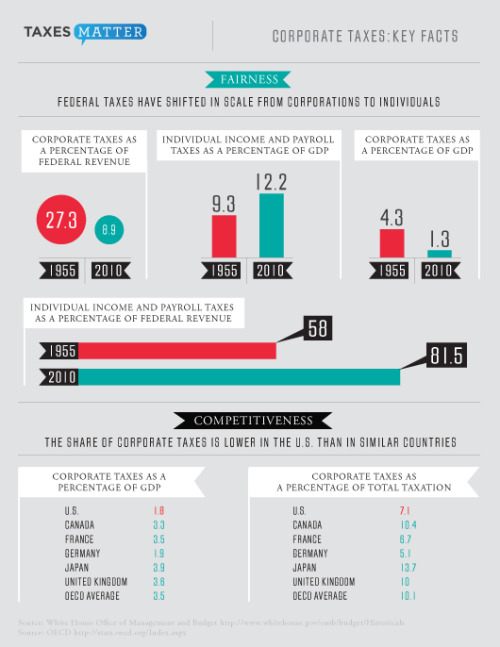
On top of the spending on tax cuts (yes, tax cuts are spending), most corporations are barely paying taxes as it is, if at all, because of countless loopholes and preferential rates for capital gains.
In the meantime, the majority of what is to be cut to save our deficit and protect future generations, based on Ayn Rand worshiper Paul Ryan’s budget proposal, is made up of necessary services and means tested programs (often conveniently confused for entitlement programs) that are relied upon by the poor, unemployed, disabled and elderly, not to mention Federal Financial Aid for low income college students.
I’ve been told by yuppie libertarians before that “those things aren’t a legitimate function of government.” My answer: “who gets to decide that?”
Because, as I’ve explained countless times before, the survival and safety needs are the legitimate function of government. What’s not legitimate is out of control military spending on imperialistic, neo-colonial endeavors. 
What’s not a legitimate function of government is depriving people of the things they need to feed economic and social power.

Monday, April 18, 2011

Speaking of Ayn Rand

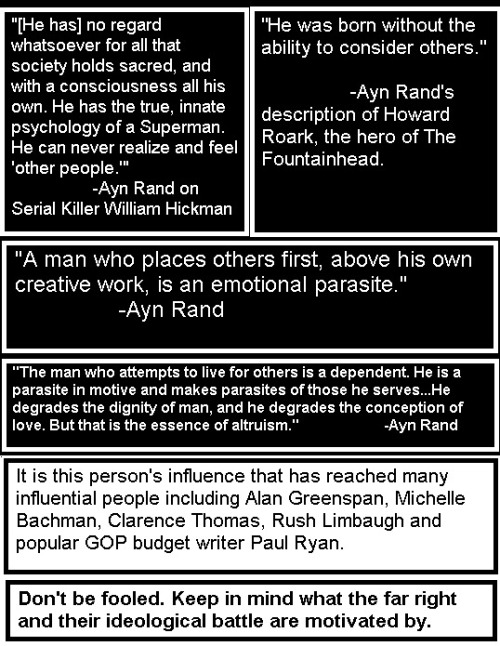
I made a mediocre infographic showcasing the character of this right wing hero who has had so much influence on political discourse lately. Feel free to distribute this as much as you like.

Noticed this on one of my favorite Tumblogs:


MFW I saw it:
image
Let me tell you why that’s bullshit, k?
Now, despite my seething hatred for Ayn Rand and other than the lengthy, moralistic, trying-too-hard monologues that, as Peter Griffin would say “insist upon” themselves, I don’t suppose Rand’s writing style is horrible.
Anon says “Basically it’s about a woman running a train company in a world with super strict laws.” What a misleading description. That’s basically not what it’s about, the whole point of the book is that the Train Company runners and other industrialists of the world are the Gods that we, as blood sucking collectivist leeches, should be worshipping instead of holding accountable. Hence the title: Atlas was the mythical character charged with holding the entire world on his shoulders. In the book, someone asks someone else what Atlas would do, and he said Atlas would “Shrug,” as if to throw all of the blood sucking leeches who owethe rich their lives into oblivion.
The book is Yuppie masturbatory material. It, and objectivism, are meant to assert that exploitation and and generally putting your own self-actualization needs above the needs of everyone else is morally right.
Anon makes it sound like some feminist tale: It’s not just a benevolent capitalist hero, it’s a female benevolent capitalist hero!
Except that the female capitalist hero gets raped by her boyfriend capitalist hero and it is perfectly okay because he is a superior capitalist hero. There’s no individual empowerment, only the right of the strong to fuck (literally) over the weak.
Defenders of Objectivism almost always call strawman. “That’s not what it’s about, bro, it’s about how the individual is more important than the collective.”
Yes. That is what it’s about and you just repeated what I said with candy-coated language.
It’s that, as a benevolent capitalist hero, your self actualization needs come before the needs of everyone else, and that is perfectly moral. Charity isn’t immoral, per se, but you should only do it if you feel like it, not because you are feel morally obligated (never mind the fact that your wealth is derived from these peoples’ poverty), and only if the people you would be helping are perfectly subservient and compliant. If they get uppity, forget it.
It’s really funny what things will launch me into a rant like that. MFW

“Over a dozen banks will compensate victims for losses that occured as a result of mistakes on foreclosures according to an agreement reached with government regulators today.” Sauce.
Now if only we could end foreclosures completely.

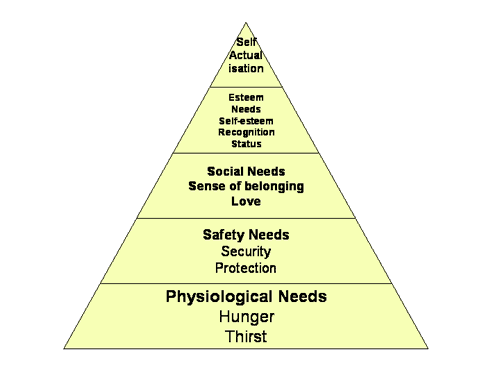
This is Maslow’s Hierarchy of needs. I am of the opinion that, under no circumstances should a person’s access to those bottom two tiers of the pyramid be subject to that person’s economic status, and that the top tiers should at the very least be accessible through the community.


 I believe that civilization has the biological purpose of being a means of collective survival. This is why we were compelled to create it in the first place; it’s in our nature. We are a social species, and it is this characteristic that has allowed us to survive.

Any civilization that fails to fulfill this purpose, let alone one that deprives people of their needs is a bastardization of its original purpose

Nobody should attain their self-actualization needs at the cost of the safety and physiological needs of others.
/rant.

I have a small problem with boycotts…

I understand not wanting to support companies and industries that do unjust things, I personally share this sentiment in regards to many industries/companies. Beyond that, though, as an instrument of bringing about actual change I think the boycott is a misguided exercise in futility. It only scratches the surface of the problem.

Say there’s a coffee company that profits from human trafficking, and the Prius drivers and Starbucks drinkers of the world conduct a successful boycott: the Coffee Company caves to the pressure and hires minimally reimbursed growers instead of slaves, they only changed their practices because the loss in profits attributed to the boycott were more than that which would be caused by ending their practices.

The change in practice was not a sudden realization of their wrongdoing and the value of human life, it was motivated by profit - the same thing that motivated the use of trafficked slaves in the first place.
Yes, our boycotting friends have effectively ended that one injustice, but in utilizing free market practices to do so they have not only effectively ignored every root causes of that injustice, but they’ve reinforced the very system that caused it in the first place.

Boycotts are really only good for the individual’s reassurance that he or she is not supporting unjust practices. It’s a treatment to alleviate the symptoms, but it does absolutely nothing to cure the disease; like taking Aspirin while parasites eat your colon.

Misconceptions Addressed: The Inherent Evil of Mankind


If I had a nickel for every time I heard someone denounce anti-capitalist ideas by citing the supposed greed of humanity, I wouldn’t be writing this. I would be living in the Hamptons defending the stupidity that made me rich. “greedy, competetive, over-consuming, individualistic” - all of these things the human race supposedly is, and it’s why “socialism is against human nature,” “the problem isn’t the system it’s people” and my favorite “socialism looks good on paper.”

Remember that old card game we played in Middle School? I call bull shit.

The human race is a social species, like ants or bees but with consciousness and thus individuality. That is why civilization exists in the first place. It was recognized that there were long term and short term benefits to organizing. Collective survival was in the interest of all. Mutual aid and cooperation were our evolutionary advantage. They were our key to survival.

This is why it feels good when you do nice things for people, even when it is not in your self interest. Studies have even been conducted showing that altruistic behavior triggers a reward response in your nervous system. That’s not religion, upbringing or morality; that’s biology.


Reciprocal Altruism occurs all over the place in the Animal Kingdom which, as I see it, seems to indicate that it is our nature.

The greed, competetiveness and overall douchebaggery we see is not nature. There is, actually, a fundamental difference between nature and a learned behavior. When your biological means of survival -civilization- is failing to fulfill its purpose, you are going to adopt behaviors that will help you to survive. When you live in a society that awards greed and competetiveness, you are going to adopt those characteristics, regardless of your nature.

How, then, did civilization become what it is today? Power. All it took was for one person to recognize the personal benefit he would recieve from controlling the resources that others needed for survival - the advent of private property, and for that individual to develop means of protecting his property from the collective power of the masses who needed it - the advent of government.

Since that time  -through every stage of social evolution from the empires of ancient Egypt, to the Feudal Lords of Medieval Europe and Asia, and to modern Nations and regimes- that has been the basic structure of society. As such, civilization has been warped into a means of serving the powerful, rather than the people who participate in it; and the misconceptions we have about our civilization and ourselves perpetuate that structure.

Rousseau’s Du contrat social affirms this. In it he asserts that society before private property was mostly egalitarian and that the ideal state should (though it does not) function as a manifestation of the general will. Adam Smith, in The Wealth of Nations, himself states that Government primarily functions as a means of protecting property from society.

Considering all of this, I think it’s perfectly reasonable to say that egoism is a learned behavior. Society is a biological means of survival, when it fails us because its function has been bastardized, we as individuals must find our own means of survival that defies our own nature. This is not to say that egoism is completely unnatural itself, but when it is rewarded, its behaviors are reinforced and the whole system is perpetuated; especially when we maintain that those behaviors are natural.

Misconceptions addressed: The Self Made Man and Meritocracy

The reactionary misinformation that perpetuates false consciousness.

There’s a famous quote, the author of which is disputed, that goes “Socialism never took root in America because the poor see themselves not as exploited proletariat, but as temporarily embarrassed millionaires,” and I’ve found this to be very true. There are legions of people who will defend to their deaths the rights of the rich, even when they are at odds with their own economic interests. This is because they have been taught to believe from childhood that American capitalism is a meritocracy, and thus believe that:

a. All who are rich got that way through hard work and ingenuity.
b. They, too, can become rich through their own hard work and ingenuity.

I, personally, find this sentiment insulting, as should anyone with a poor/working class background who has seen first hand the most hard working people in the world living in shacks and driving 30 year old vehicles.
The meritocracy myth is taught to us directly, and through the peripheral route. Example: Thomas Edison, a man born with one or more learning disabilities who goes on to invent the lightbulb; he teaches us that, even if we face crippling obstacles, as long as we just happen to be inventors with a great deal of luck in patenting and marketing our inventions, any of us can be an American success story.

Of course, as I said, the American meritocracy is obvious bull pie. In fact, it is something that has lately come under a great deal of scrutiny. Even a professional who makes a living coaching Executives and othe business leaders says, ”I have been struck by how many people blindly follow the images portrayed by the media that try to convince the masses that “you too” can be the next athletic, singing, acting or business star regardless of your background, when the odds are astronomical that it will happen.”

This idea is simply not a reality. Those who defend it have only anecdotal accounts and examples; the millions of examples that contradict them are conveniently ignored.